

As you know, we are bullish about the long term potential of AI but acknowledge that the medium term ROI debate remains unresolved.
In that context, and consistent with what people like Stanley Druckenmiller and David Solomon were saying at TomorrowX, it has become important to focus on AI applications.
One of the AI applications that is under-discussed is insurance claims, and one constituency that we don’t hear from enough is the forward deployed engineers, engineers embedded with clients who build AI applications on the client's own systems. These guys are arguably best placed to think about how much value AI can capture.
This is why I’m excited to help Funda’s engineers launch their own newsletter, Horizon. I think we can look forward to the following content:
Detailed thinking about how much value AI can capture in various enterprise workflows.
Content informed by alternative data, such as collection and analysis of online discussion of products like Muse and Microsoft Office competitors.
Highlights of notable data drawn from the Funda platform, such as alerts relating to trends in GPU rental pricing, inference token inflections, and sector rotations. These are all tools they are building.
Posts relating to Funda’s experience developing AI tools for investors.
Horizon’s first post shows the promise of this approach. Until now, I’ve yet to see anyone on X or Substack break down the value that can be captured from AI assisted claim handling.
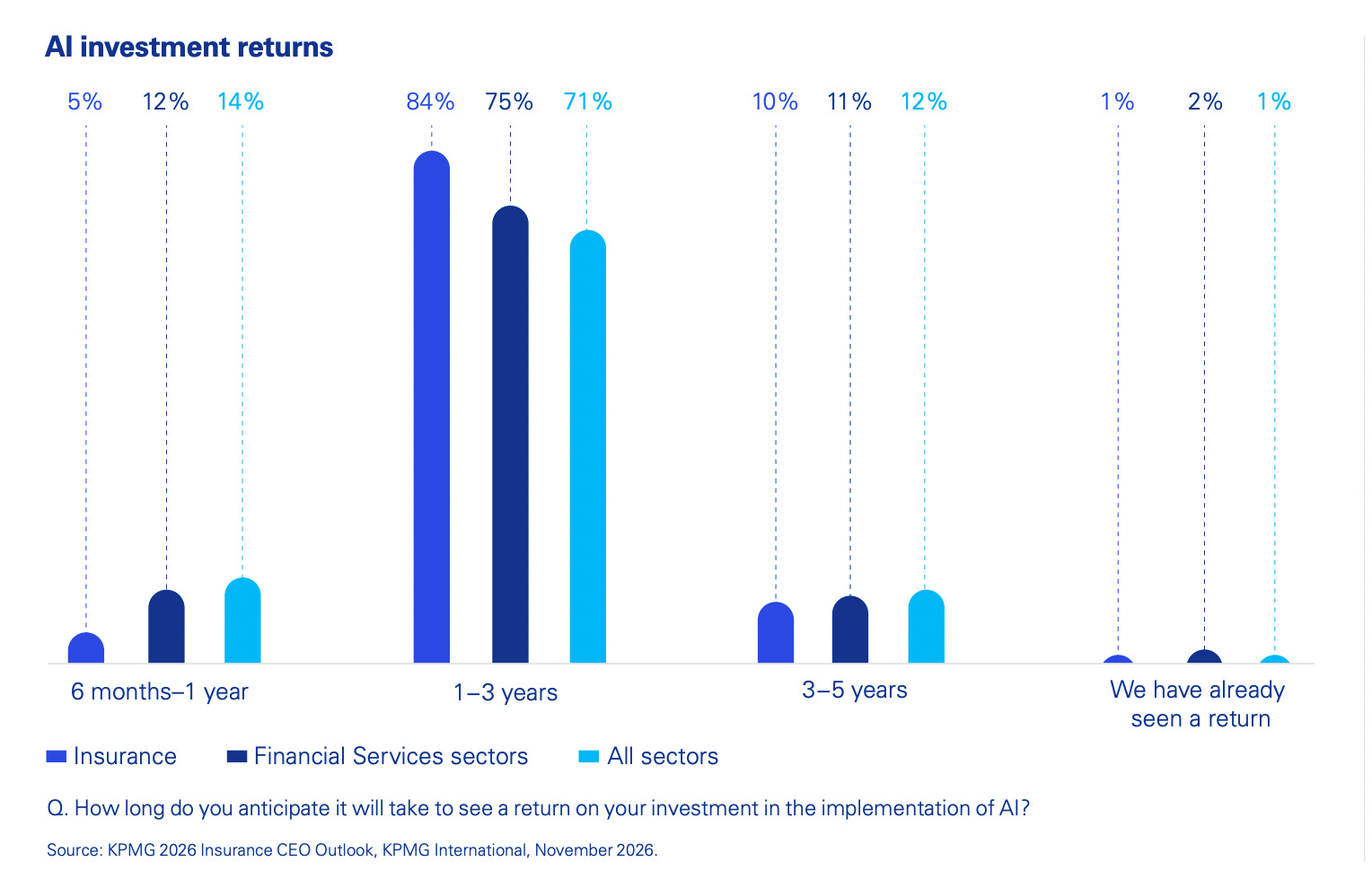
Yet, according to a recent KPMG survey of CEOs, insurance CEOs are most optimistic about AI ROI in the next three years, compared to CEOs in all other sectors (84% of insurance CEOs vs 71% of all other CEOs).
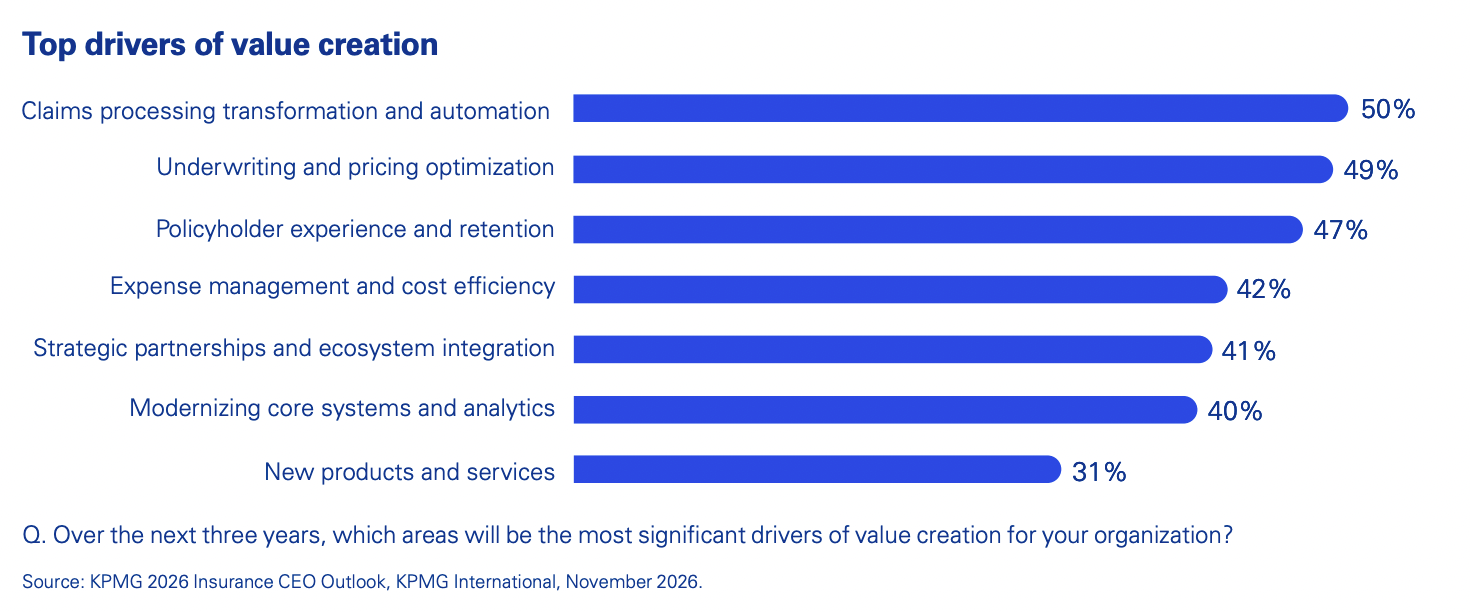
And the top driver of AI value creation that they cite is claim handling:
I set out a short preview of our engineers’ thinking below. Do hit them with a subscription here.
The labor and service costs associated with receiving an insurance claim, determining the loss, deciding the amount payable and paying it are booked as loss adjustment expense (LAE).
According to the National Association of Insurance Commissioners (NAIC) the body that coordinates US state insurance regulators), US property and casualty (P&C) insurers incurred about $86bn of LAE in 2025, equal to 9.0% of premiums.
Funda’s engineers observed that AI labs such as OpenAI and Anthropic are training claims models and sending forward-deployed engineers into insurers to build claims agents.
Funda believes AI’s impact on the claims value chain will play out in this sequence: insurers cut costs first, labs gain incremental revenue, and claims outsourcers face renewal price cuts first and lower claim volumes later.
The opportunity is AI could create about $26.5bn of value a year for US P&C insurers, comprising $14.9bn of LAE savings and an $11.6bn reduction in claims leakage, i.e. payments above what the policy actually owes.
How much of that value can AI labs capture? Apart from the labs, who else is a winner and who is most negatively exposed?